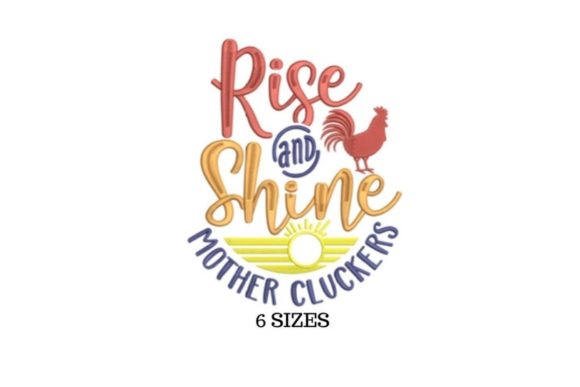
Rise and Shine: A Craft Fair-Ready Farm Embroidery Design
First Impression: Friendly, Farm-Fresh Humor with Handmade Charm
As an embroidery designer who’s stocked over 30 craft fairs and built a small-batch business around farm-themed handmade products, my first thought on Rise and Shine is: this lands right in the sweet spot. It’s not overly rustic or cartoonish—it’s warm, approachable, and quietly clever. The title alone sparks a smile, especially when paired with real-world farm life: early mornings, muddy boots, and that quiet pride of tending land and livestock. It reads as funny but not silly, farm-themed but not cliché, and handmade-friendly without demanding perfection. That balance is gold at a craft fair—where buyers scan tables in seconds and choose items that feel both authentic and joyful.
Where Rise and Shine Shines on Real Craft Fair Products
I tested Rise and Shine across seven staple booth items—and it performed strongest where personality meets practicality:
- Tote bag design: Centered on a natural canvas tote, it reads clearly from 6 feet away. The phrase has enough rhythm and spacing to avoid visual clutter—even on textured fabric.
- Apron embroidery: Placed just above the pocket (not too high, not too low), it adds wit without competing with stains or flour dust. Works beautifully on denim, linen, and medium-weight cotton.
- Tea towel embroidery: Small-scale version fits neatly in the corner or along the hem. The design holds up well on terry cloth—no stitch skipping if stabilizer is used correctly.
- Embroidered patch: Ideal for iron-on or sew-on application. Customers love attaching these to jackets, market bags, or kids’ backpacks—making Rise and Shine a repeat-purchase item.
- Pillow cover & pouch: On soft, tightly woven fabrics, the lettering stays crisp and the overall shape feels intentional—not cramped or stretched.
It’s less effective on curved surfaces like caps unless resized and digitized specifically for that application. And while it *can* go on dark fabric, I recommend pairing it with high-contrast thread colors—cream on navy, yellow on charcoal—to preserve legibility.
Production Reality Check: What Makes Rise and Shine Booth-Ready
This isn’t just about aesthetics—it’s about flow. At a craft fair, you’re stitching, pricing, chatting, and restocking all at once. Rise and Shine supports that pace:
- Easy to understand at a glance: No decoding needed. “Rise and Shine” is universally readable—even in sunlight or under tent lighting.
- Flexible sizing: Works as a 3-inch focal point on a pouch or scaled to 6 inches on a market bag. Avoid going smaller than 2.5 inches—the letterforms retain clarity, but tiny details (like subtle curve endings) start to blur.
- Strong online presence: Photographs cleanly for Etsy listings and printable mockups. The clean line work and balanced negative space translate well to flat-lay shots and lifestyle images.
- Batch-friendly: Moderate stitch density means consistent results across 20+ pieces—no major thread breaks or tension surprises if your machine is calibrated and stabilizer is matched to fabric weight.
Careful-Use Notes Every Embroiderer Should Know
Even friendly designs have limits—and overlooking them can cost time, thread, and customer trust. With Rise and Shine, pay special attention to:
- Fabric texture: Avoid highly napped or loosely woven towels without tear-away + cut-away stabilizer combo. Stitch density may sink into pile otherwise.
- Small lettering: While legible at 3 inches, don’t shrink further for patches under 2 inches—some curves and counters will close up visually.
- Thick or layered fabric: Double-check hoop size before stitching on denim aprons with pockets underneath. Some versions of this design may push standard 4x4 hoops—verify before cutting production runs.
- Dark fabric contrast: Test thread colors on scrap first. Light tan or oatmeal thread often reads warmer and more cohesive than stark white on deep indigo or forest green.
Why Rise and Shine Strengthens Your Handmade Brand
At the booth, Rise and Shine does more than decorate—it builds connection. Customers pause, chuckle, and say, “That’s *so* my dad,” or “My neighbor’s been saying that since sunrise.” That micro-moment of recognition is what turns browsers into buyers. It reinforces your identity as a maker who understands rural life—not through stereotypes, but through shared rhythm and gentle humor.
Visually, it elevates perceived value: a simple tea towel becomes a giftable handmade product because the embroidery feels intentional, not generic. It also supports brand consistency—if you carry other farm-inspired embroidery file collections, Rise and Shine fits seamlessly alongside them without needing rebranding or tone adjustments.
Designer-to-Designer Checklist Before You Stitch
Before adding Rise and Shine to your next craft fair lineup, run through these non-negotiables:
- Test the machine embroidery design on scrap fabric matching your final product (e.g., unbleached linen for aprons, terry cloth for towels).
- Confirm thread contrast—especially for Etsy seller listings where color accuracy matters.
- Review spacing between letters and baseline alignment. Uneven kerning ruins readability at scale.
- Verify hoop size compatibility—don’t assume “multiple embroidery file formats” means all fit your smallest hoop.
- Inspect stitch density in tight curves. Overly dense areas trap moisture and stiffen fabric unnaturally.
- Choose stabilizer based on fabric weight—not habit. Medium-weight cut-away works best for most farm-themed tote bag design and apron embroidery applications.
- Create at least one real mockup—not just a digital preview. See how light hits the threads, how fabric drapes, and how the phrase sits in context.
- Compare across 2–3 fabric colors. What reads warm and inviting on oatmeal may look washed out on ivory.
- Confirm commercial licensing terms before selling finished product. This is essential for small shop product integrity and long-term Etsy seller trust.
Rise and Shine isn’t just another embroidery file—it’s a conversation starter, a gift-ready moment, and a reliable craft fair performer. When stitched with intention and sold with story, it turns everyday handmade products into meaningful, memorable keepsakes.