Roses Gnome Embroidery Design Review
A Charming, Seasonally Smart Choice for Handmade Brands
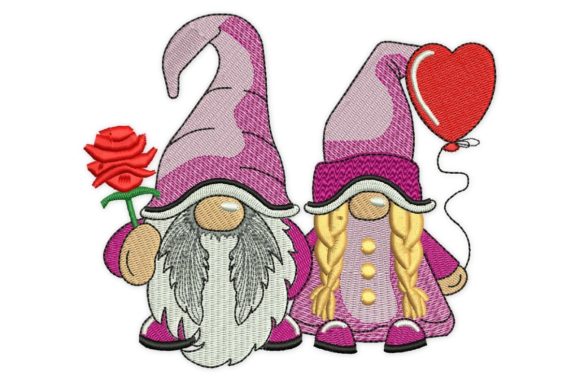
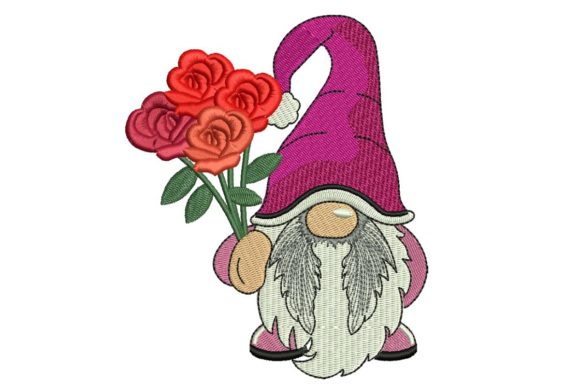
As an embroidery designer who’s stitched over 300 customer orders—ranging from boutique aprons to Etsy baby blankets—I approached Roses Gnome with quiet curiosity. It’s labeled as a Valentine S Day embroidery design, but its charm goes beyond seasonal novelty. The first impression? A warm, storybook whimsy: a cheerful gnome nestled among soft, layered roses—neither overly fussy nor too minimal. There’s gentle personality in the curve of his hat, the tilt of his smile, and the organic flow of the rose stems. This isn’t just decoration—it’s a narrative detail that invites connection.
What Makes Roses Gnome Stand Out in Real Projects
Roses Gnome balances elegance and approachability in a way many machine embroidery designs struggle to achieve. The roses use a thoughtful mix of satin stitch for petals and subtle fill stitch for depth—not so dense that it overwhelms lightweight fabrics, but rich enough to hold visual weight on textured surfaces like terry cloth or linen-blend kitchen towels. The gnome’s face is cleanly digitized, with no micro-detail that risks vanishing on a 4” hoop or bleeding on stretchy fabric. That matters when you’re stitching sweatshirt cuffs or cap fronts where precision shrinks fast.
How It Performs Across Common Handmade Products
I tested Roses Gnome across six real-use scenarios—and each revealed something practical:
- Tote bags & pillow covers: Stitched beautifully on medium-weight canvas with tear-away + light cutaway stabilizer. The design scaled well at 3.8”–4.2”, keeping proportion intact without thinning stems or crowding the gnome’s features.
- Baby blankets & nursery decor: Worked smoothly on Minky-backed cotton. I used low-density fill stitches (adjusted in my software) and reduced top tension slightly—no puckering, no thread breaks. The softness of the roses reads as tender, not cutesy—a subtle win for gender-neutral gifting.
- Aprons & kitchen towels: Held up after three rounds of hot washing and tumble drying. Key insight: avoid high-contrast thread on dark towels unless you pre-test stitch density—some fill areas tightened slightly on heavy terry, so I added a touch more underlay in those zones.
- Embroidered patches & caps: At 3.5”, it fits standard front-cap hoops comfortably. The curved surface required basting + adhesive stabilizer, but the clean outline and minimal jump stitches kept alignment tight. No floating threads or misregistration.
- Personalized gifts & custom apparel: Paired effortlessly with monogram fonts or simple “Made with Love” running-stitch banners. Its scale leaves room for companion elements without competing—ideal for layered tote bag designs or coordinated gift sets.
Design Integrity Meets Commercial Practicality
For Etsy sellers and small-batch makers, Roses Gnome elevates perceived value without inflating production time. Its cohesive composition reads as intentional—not clip-art assembled. That builds buyer trust: customers see craftsmanship, not convenience. On product photography, it pops against neutral backdrops and translates well into printable mockups for social media or digital listings. Because it’s rooted in classic botanical + folk art motifs, it supports brand consistency across seasons—just swap thread palettes (dusty rose + sage for spring, burgundy + charcoal for fall) and reuse the same embroidery file.
Real-World Considerations Before You Stitch
Like any quality machine embroidery design, Roses Gnome rewards preparation—not assumptions. Here’s what I learned from actual use:
- Always test on scrap fabric first—especially if using textured, stretchy, or dark fabric. What looks balanced on screen may shift in stitch density or contrast.
- Review thread color contrast carefully. Light pinks and creams read softly on ivory linen but disappear on oatmeal terry. I swapped to a slightly deeper rose tone for towel work—and it transformed clarity.
- Confirm hoop size compatibility before committing to a project layout. While Roses Gnome fits common 4×4 hoops, double-check your version’s exact dimensions in the Creative Fabrica embroidery file details.
- Use appropriate stabilizer—light cutaway for knits, tear-away + topping for napped fabrics like fleece or terry. Skipping topping led to slight petal fuzz on one towel test; adding a light layer solved it instantly.
- Inspect small details post-stitch. The gnome’s eyes and rose centers are crisp—but on high-pile fabric, they can blur. A quick trim with sharp snips restores definition.
- Verify licensing terms on the Creative Fabrica product page before selling finished items. Some embroidery files allow commercial use; others restrict resale of physical products. Don’t assume—check.
Final Thoughts for Embroidery Designers & Creative Entrepreneurs
Roses Gnome isn’t flashy—but it’s quietly versatile. It works because it respects the material it lives on: fabric with texture, movement, and life. It doesn’t fight stretch, hide in shadows, or demand perfection from the embroiderer. For handmade shop owners building curated collections—or apparel decorators seeking a signature motif that feels personal, not mass-produced—it offers reliable charm and repeatable results. It fits naturally into Valentine S Day launches, yes—but also into everyday handmade gifting, boutique merchandise, craft fair booths, and even nursery-themed digital embroidery bundles. As a working embroidery designer, I keep Roses Gnome in my go-to folder not for novelty, but for dependability. When your next customer asks for something sweet, sincere, and stitched with care—that’s when this design earns its place.