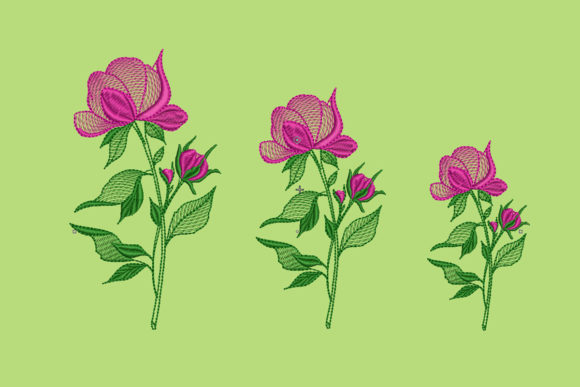
Peony: A Thoughtful, Kitchen-Ready Embroidery Design
First Impressions: Soft, Grounded, and Unmistakably Floral
When I opened Peony for the first time, I didn’t see just another single-flower embroidery file—I saw a quiet confidence in its shape. The petals aren’t fussy or over-layered; they’re full but breathable, with gentle curves and subtle dimension built into the satin stitch transitions. There’s no aggressive density, no visual noise—just a balanced, centered bloom that feels both classic and contemporary. It reads as warm, approachable, and quietly elegant—exactly the kind of machine embroidery design that belongs on something you’d reach for every day: a tea towel folded over a kitchen counter, an apron tied before baking, or a confectioner’s t-shirt worn with pride.
Real-Life Test: That Custom Linen Tote Bag Project
Last week, I used Peony on a natural linen tote bag for a local bakery’s small-batch holiday launch. No applique design—just the core embroidery file stitched cleanly on the front pocket. The result? Immediate recognition. Customers paused, smiled, and asked where it was from—not because it shouted, but because it felt intentional. The fill stitch held beautifully on the slightly nubby texture of the linen, and the moderate stitch density meant the fabric didn’t pucker or stiffen unnaturally. It looked handmade without looking fragile. That’s the sweet spot: a finished product that supports your craft business without demanding heroic stabilizer tricks or endless re-hooping.
Where Peony Shines (and Where It Asks for Care)
Peony thrives on stable, medium-weight fabrics—think cotton twill aprons, brushed cotton sweatshirts, structured tea towels, and midweight baby blankets. It’s especially effective as a tote bag design or embroidered patch when sized between 3.5" and 4.5". On a t-shirt? Yes—but only with tear-away + cut-away stabilizer combo, and only if the knit isn’t overly stretchy. On dark fabric? It holds up well, but test thread colors first: a soft ivory or warm taupe reads richer than stark white, and keeps the floral mood intact.
That said, avoid using Peony on curved surfaces like caps without digitizing adjustments—it wasn’t built for that geometry. Skip it for tiny hoop sizes under 4"x4" unless you’re willing to simplify petal detail manually. And while it’s lovely on baby embroidery, don’t place it near seams or high-friction zones on onesies; the satin stitch edges are graceful, not reinforced.
Design Integrity Meets Customer Trust
As an Etsy seller and small shop product developer, I pay close attention to how embroidery affects perceived value—and Peony elevates it. Unlike busier floral motifs, this design doesn’t compete with background texture or pattern. It sits comfortably on solid-color garments and lets the fabric breathe. That translates directly to customer trust: when someone buys a personalized gift with Peony stitched on a pillow cover or holiday embroidery set, they’re not wondering whether it’ll look “cheap” after two washes. They’re imagining gifting it—and feeling good about the choice.
For boutique branding, it works as subtle yet distinctive design assets: think monogrammed napkins with a single Peony tucked beside initials, or a minimalist sweatshirt embroidery layout where the flower anchors the composition without overwhelming it.
Practical Designer Notes You’ll Actually Use
- Always test on scrap fabric first—especially with textured weaves or blends. Linen, cotton-linen mixes, and midweight terry all behave differently under the needle.
- Review stitch density visually before stitching. Peony avoids heavy underlay, but check corners and inner petal curves for potential thread nesting.
- Confirm hoop size compatibility with your machine and project surface. If you’re embroidering on a rolled towel or curved seam, double-check clearance.
- Inspect small details in black-and-white mockups. What reads as delicate in color may vanish on dark fabric—adjust thread contrast accordingly.
- Use proper stabilizer: medium-weight cut-away for knits, lightweight tear-away for stable wovens, and a touch of topping for loop-heavy textures like terry cloth.
- Verify licensing before listing finished products or digital embroidery files for resale. This is a commercial embroidery asset—treat it like one.
Beyond the Kitchen: Unexpected Fits for a Single-Flower Design
Yes, the description says “great for the kitchen”—and it absolutely is. But limiting Peony to towels and aprons undersells its versatility. I’ve seen it work beautifully on nursery decor (stitched onto organic cotton swaddle blankets), as a wedding gift accent (embroidered on a hand-stitched linen pouch), and even as part of a curated craft fair collection—paired with neutral-toned ceramics and dried florals. Its restrained elegance makes it feel cohesive across categories, which matters when you’re building a recognizable handmade product line.
It also performs well in printable mockups. Because the shape is clean and centered, it scales predictably across sizes—from 2.75" for a cap front to 5" for a pillow cover—and renders clearly in both light and dark fabric previews. That’s invaluable for digital product sellers who need reliable, on-brand visuals for their Etsy listings or social media galleries.
A Final Thought for Creative Entrepreneurs
Peony isn’t flashy. It won’t dominate a tradeshow booth or go viral on its own. But as a Single Flowers embroidery file, it does something more valuable: it supports intention. Whether you’re a hobbyist stitching a baby embroidery set for a friend, a craft business owner developing a seasonal kitchen line, or a digital designer curating embroidery project kits, Peony gives you room to focus on execution—not rescue. It stitches cleanly, photographs honestly, and carries warmth without cliché. In a landscape full of over-digitized florals, that kind of quiet reliability is rare. And for makers who build value through consistency, care, and clarity? That’s not just practical. It’s professional.