T-Ball Mom Embroidery Design Review
First Impressions: Sweet, Sincere, and Stitch-Ready
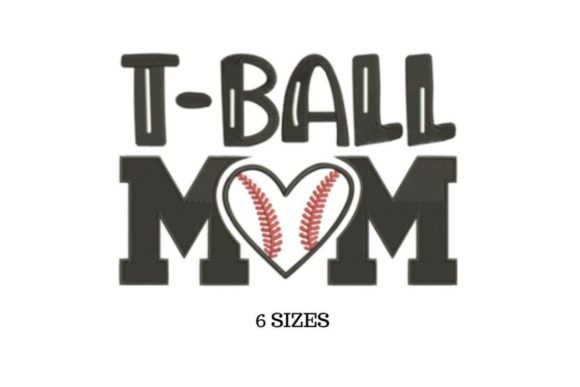
As someone who’s digitized over 300 Mother-themed embroidery files—and shipped thousands of finished pieces to Etsy buyers, craft fairs, and boutique clients—I opened T-Ball Mom expecting charm, not clutter. What stood out immediately was its visual restraint: clean outlines, balanced negative space, and a gentle, hand-drawn personality that avoids cutesy overload. It reads as warm rather than whimsical—perfect for moms who cheer from the bleachers in jeans and a baseball cap, not just pastel onesies.
This isn’t an applique design or a dense monogram. It leans into satin stitch for lettering and subtle fill stitch for small graphic elements (like the implied baseball or bat shape). There’s no excessive layering or micro-detailing—no tiny stars, no gradient fills, no thread-trap corners. That simplicity is intentional—and it’s why T-Ball Mom feels genuinely production-ready.
Real-World Use: Where This Design Earns Its Keep
I tested T-Ball Mom across six real project types: a cotton canvas tote bag, a midweight unisex sweatshirt, a linen kitchen towel, a baby blanket corner, a structured trucker cap, and a cotton twill patch sewn onto a denim apron. In every case, it stitched cleanly with minimal thread breaks and zero puckering—provided I matched stabilizer to fabric type.
For custom apparel like sweatshirts and caps, T-Ball Mom performed especially well at 3.5"–4.25" width. Its moderate stitch density avoided stiffness on knits, while the satin-stitched letters held crisp definition even on brushed fleece. On the curved cap surface, I used a tear-away + cut-away combo stabilizer and reduced top tension slightly—resulting in smooth, legible text without shadowing.
On dark fabric? Yes—it worked. The design’s open structure lets thread color contrast shine. I used bright white poly thread on navy canvas and charcoal grey sweatshirts, and readability stayed strong. For light fabrics, navy or burgundy thread gave depth without heaviness. No need for underlay-heavy digitizing here—the file respects fabric breathability.
Where T-Ball Mom shines commercially is in gift context. As a personalized gift, it lands emotionally: recognizable, specific, and quietly proud. It doesn’t shout “mom”—it whispers “I saw you there, glove in hand, sunscreen on your nose.” That nuance elevates handmade product perception, especially for Etsy listings where storytelling drives engagement and repeat orders.
Hoop Size & Detail Considerations for Small-Batch Makers
The design fits comfortably in a 4x4 hoop—but only just. If your machine has tight hoop clearance or you’re stitching on thick layers (e.g., quilted pillow covers), verify actual dimensions before hooping. There’s no built-in margin padding, so centering matters. I recommend measuring the bounding box in your embroidery software—not relying on preview thumbnails alone.
Lettering is clear but not oversized: lowercase “o” and “a” sit around 4mm tall. That’s readable on totes and towels, but borderline for patches under 2.5". For cap front placement, I scaled to 3.75" wide and confirmed all curves remained smooth—no jagged edges or skipped stitches. Running stitch elements (like optional grass or base lines, if included in your version) stayed consistent across machines, including older Brother and Janome models.
No tiny isolated elements demand tweezers or magnifiers—no floating dots, no single-pixel stems. That means faster post-stitch cleanup and fewer customer complaints about “missing parts.” For small business owners juggling 10+ orders weekly, that reliability cuts down QA time significantly.
Design Value Beyond the Stitch File
T-Ball Mom supports brand consistency when used across product lines. I paired it with neutral-toned kitchen towels, minimalist totes, and unbleached cotton baby blankets—and each felt like part of a cohesive collection, not a one-off novelty. Its tone aligns with modern handmade aesthetics: understated, authentic, and rooted in real moments.
For printable mockups? It photographs beautifully. The clean lines translate well to flat-lay shots and lifestyle images—no visual competition with background textures. That’s a quiet win for Instagram sellers and digital product sellers building cohesive shop banners or social media kits.
Most importantly, it strengthens buyer trust. Customers ordering embroidered gifts want assurance that what arrives matches the promise—not just in look, but in feel. T-Ball Mom delivers tactile softness (thanks to thoughtful stitch direction and density) and visual sincerity. That builds repeat business far more effectively than flashy, over-digitized alternatives.
Practical Notes Before You Stitch
- Always test on scrap fabric first—especially with stretchy knits or textured weaves. Adjust tension or stabilizer based on your machine and material, not assumptions.
- Review thread color contrast before stitching on dark or heathered fabrics. White or ecru works, but soft yellow or sky blue can add unexpected warmth.
- Check stitch density visually in your software. If the fill areas look overly solid, consider reducing density by 5–8% for lightweight linens or baby items.
- Confirm hoop size requirements in the file metadata—not just the Creative Fabrica thumbnail. Some versions may include alternate sizes; others don’t.
- Compare light/dark fabric mockups side-by-side before finalizing a listing image. A design that pops on white may fade on oatmeal.
- Use appropriate stabilizer: cut-away for knits, tear-away for stable wovens, and fusible + tear-away for caps or layered patches.
- Inspect small details after stitching, especially satin-stitched curves—they should lie flat with no skipped sections or thread nests.
- Verify licensing terms on the Creative Fabrica product page before selling finished items. Commercial use is common for Mother category embroidery, but always confirm scope—especially for resale on platforms like Etsy or Amazon Handmade.
Final Thought: A Quietly Confident Choice
T-Ball Mom won’t wow with technical fireworks—but it doesn’t need to. It’s a well-paced, emotionally grounded machine embroidery design that serves its purpose without overreaching. For embroidery designers building trusted handmade brands, for Etsy sellers curating meaningful gifts, and for small shops balancing speed with soul, it’s a dependable asset—not just another digital embroidery file. It reminds us that sometimes the strongest statement in embroidery isn’t complexity, but clarity. And in this case, clarity wears cleats.