Scandinavian Christmas Reindeer
A Designer’s First Look: Clean, Calm, and Confidently Nordic
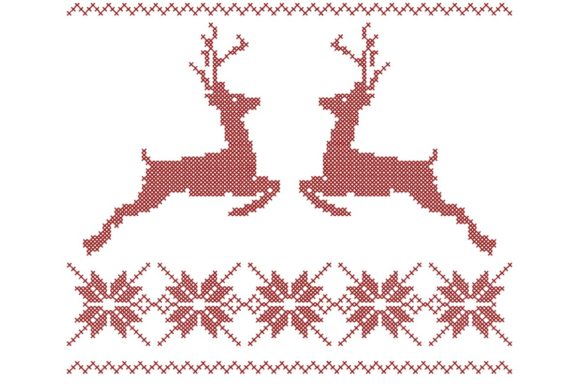
When I opened the Scandinavian Christmas Reindeer embroidery file, my first thought wasn’t “festive” — it was “intentional.” This isn’t a busy, glittery reindeer with antlers bursting into the hoop. It’s a balanced, centered silhouette — soft curves, subtle negative space, and just enough detail to read clearly at 3–4 inches wide. The design breathes. That’s rare in holiday machine embroidery, where so many files overcompensate with dense fill stitches or fussy outlines. This one leans into Scandinavian restraint: quiet confidence, not loud cheer. It feels like a design made for real products — not just holiday craft demos.
Real-World Test: Stitching It onto a Linen-Cotton Tea Towel
Last week, I used Scandinavian Christmas Reindeer on a set of kitchen towels for a local boutique’s holiday launch. We chose natural linen-cotton blend — textured, medium-weight, and prone to puckering if stabilizer or stitch density isn’t dialed in. I hooped medium tear-away + light cutaway combo, tested thread colors on scrap first (navy on cream gave rich contrast; pale grey on oat felt elegant but needed a white underlay), and ran the design at 75% speed. The result? Crisp satin-stitched antler tips, smooth fill-stitched body with no skipped stitches, and clean running-stitch accents along the muzzle. No re-hooping. No thread breaks. Just quiet, consistent stitching — exactly what small shop owners need when producing 30+ units before Black Friday.
Where It Shines (and Where It Asks for Thought)
Scandinavian Christmas Reindeer works beautifully on:
- Custom apparel: Sweatshirts, crewnecks, and relaxed-fit tees — especially over left-chest or sleeve placements. Its open layout avoids bulk and reads well even on slightly curved surfaces.
- Embroidered patches: Clean edges and moderate stitch density mean it cuts cleanly and holds shape after heat-sealing or sewing on.
- Baby embroidery: Gentle lines and no tiny, high-risk details (like micro-eyes or thin legs) make it safe for onesies and burp cloths — provided you use soft, low-pile stabilizer.
- Tote bag design: At 4.2" wide, it anchors canvas or duck cloth without overwhelming the fabric or competing with handles or pockets.
- Holiday gifts & boutique branding: It reads as handmade but polished — the kind of detail that makes customers pause, then say, “I need three.”
But it’s not universal. Use caution with:
- Small hoop sizes (<4" x 4"): The design needs breathing room. Crowding it risks distortion in the antler curves and loss of definition in the face.
- Stretchy fabric (like jersey or ribbed knits): Requires proper cutaway stabilizer and possibly reduced stitch density — test first. The clean lines won’t forgive stretching.
- Dark or heavily textured fabric: On black terry cloth or thick fleece, the subtlety can mute. Consider adding a white underlay or switching to a bolder thread color.
- Curved surfaces like caps: Works best on front panels with gentle curvature — avoid steep crowns unless you’re using a cap frame and have verified hoop compatibility.
What It Adds to Your Finished Product — Beyond the Stitch
This isn’t just a reindeer. It’s a quiet signal: thoughtful, intentional, made with care. When stitched onto a linen pillow cover or an organic cotton apron, Scandinavian Christmas Reindeer elevates perceived value — customers don’t see “holiday embroidery,” they see “design-led gift.” For Etsy sellers, that translates to better photo mockups, stronger buyer trust, and fewer “Is this handmade?” questions. For craft fair vendors, it means your table doesn’t shout — it invites. And for commercial embroidery shops, it’s a reliable, repeatable asset: fast to digitize (if customizing), easy to scale across product types, and consistently legible in both color and grayscale mockups.
Practical Designer Notes Before You Stitch
Before committing to a full run — whether for client work, your own craft business, or holiday inventory — do these five things:
- Test on scrap fabric — same weight, weave, and stretch as your final material. Watch how the antler tips land and whether the face fills evenly.
- Check thread color contrast in natural light and on camera. A warm beige may vanish on tan twill; a cool charcoal pops on oat linen.
- Review stitch density — especially in the body fill. If it feels heavy for your fabric, adjust density in your software *before* hooping.
- Confirm hoop size and placement. Measure your intended location — leave at least ½" margin around the design on all sides.
- Verify licensing. Since this is a digital embroidery file, confirm whether it’s cleared for commercial use in your region and platform (e.g., Etsy, Shopify, craft fairs). Don’t assume — check the seller’s terms.
Final Thought: A Design That Serves the Maker
As someone who’s stitched hundreds of holiday files — from overwrought snowflakes to pixelated Santas — Scandinavian Christmas Reindeer stands out because it respects the process. It doesn’t fight the machine. It doesn’t overwhelm the fabric. And it doesn’t ask the maker to overcompensate with extra stabilizer, slower speeds, or post-stitch fixes. It’s calm, capable, and quietly versatile — the kind of embroidery file that makes your next holiday collection feel cohesive, professional, and authentically handmade. Whether you’re embroidering baby blankets for new parents, launching a small shop line of holiday kitchen goods, or building digital design assets for other creators, this reindeer earns its place — not as decoration, but as a thoughtful tool.