Elegant Woman: A Designer’s Real-World Embroidery Review
First Impressions: Grace, Not Gimmick
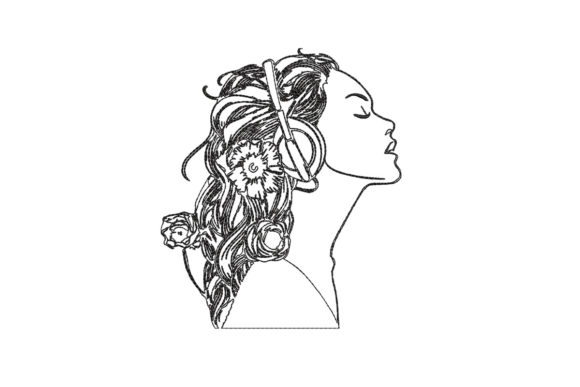
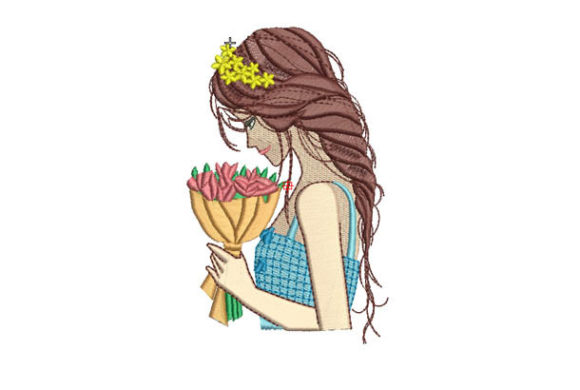
When Elegant Woman opened in my embroidery software, I didn’t see another floral silhouette or cursive monogram—I saw quiet confidence. The design balances clean line work with subtle texture: soft curves in the satin stitch neckline, delicate fill-stitch draping in the skirt, and just enough running-stitch detail in the hair to suggest movement without crowding. It doesn’t shout “feminine”—it breathes it. That matters. As a designer who’s stitched hundreds of client projects, I know that designs leaning too hard into cliché often fall flat on finished products. Elegant Woman avoids that. Its visual personality is calm, intentional, and wearable—not decorative wallpaper.
A Tote Bag Test: Where Mood Meets Material
Last week, I used Elegant Woman on a natural linen tote for a local boutique’s spring launch. We chose a muted sage thread on off-white fabric—no flash, no foil, just clarity. The result? Instant cohesion. Customers paused at the display not because it was loud, but because it felt *considered*. That’s the power of restraint in an embroidery file: it elevates the handmade product without competing with the item itself. On the tote, Elegant Woman became part of the story—not the headline. It worked because the stitch density stayed moderate (no dense fill zones that would stiffen the fabric), and the proportions scaled beautifully across a 5” x 7” hoop. No stretching, no puckering—just clean, confident stitching.
Where It Shines—and Where to Pause
Elegant Woman excels on stable, medium-weight fabrics: cotton twill aprons, brushed poly sweatshirts, tea towels, pillow covers, and structured baby blankets. Its flow translates well to custom apparel where subtlety reads as sophistication—not just for women’s wear, but for gender-neutral nursery decor or wedding guest favors where elegance reads universally.
But let’s be practical: this isn’t a one-size-fits-all machine embroidery design. On thin or stretchy knits (think lightweight tees or ribbed baby onesies), I’d add tear-away + cut-away stabilizer—especially under the shoulder and waist lines, where fine satin stitches can shift. On dark fabric, test contrast early: light-thread versions may need slightly increased stitch density to avoid “ghosting,” especially in the hair’s wispy edges. And on curved surfaces like caps? Reserve it for front-panel placement only—avoid the crown curve unless you’re using a cap frame and have confirmed hoop compatibility.
Small Hoop Reality Check
If you’re working with a 4” round or 3.5” x 3.5” hoop, zoom in before stitching. The hands and facial contour are refined—not minimalist—so scaling down below 3.75” risks losing definition. For small-shop product consistency (like matching embroidered patches for staff aprons), stick to 4” minimum. Always run a test on scrap fabric first—not just for tension, but to confirm how the fill stitch settles into your chosen textile’s grain.
What It Does for Your Craft Business
As an Etsy seller and small shop product developer, I look beyond prettiness—I ask: does this design build trust? Elegant Woman does. Its balanced composition and restrained detail signal professionalism to buyers scrolling fast. It performs well in printable mockups (works cleanly in black-and-white previews) and holds up in lifestyle photos—no pixelation, no fuzzy edges. That means less editing time, more consistent branding, and stronger perceived value in your digital embroidery file listings.
For personalized gifts? Yes—but with nuance. Pair it with a simple name script beneath, not above. Let Elegant Woman anchor the piece visually; don’t crowd its rhythm. For holiday embroidery or wedding gifts, it reads timeless—not seasonal—so it stays relevant year after year. That longevity matters when you’re curating design assets for repeat customers or wholesale boutiques.
Design Notes You’ll Actually Use
- Test before committing: Run it on scrap fabric that matches your project’s weight, weave, and color—even if it’s “just a quick sewing project.” Thread pull and stabilizer behavior change everything.
- Thread colors matter more than you think: Try it in charcoal gray on oatmeal linen, deep navy on cream canvas, or blush pink on ivory terry. Avoid high-contrast combos unless intentional—the design’s strength is its harmony, not its pop.
- Check licensing carefully: Since this is marketed as a commercial embroidery asset, verify whether resale of finished items (e.g., embroidered tote bags on your Etsy shop) is permitted. Don’t assume.
- Stabilizer isn’t optional—it’s architecture: Medium-weight cut-away works best for apparel; tear-away + light iron-on for kitchen towels or pillow covers. Skip it, and the satin-stitch drape collapses.
- Review small details in software: Zoom in on the neckline curve and wrist line. Are stitches smooth? Any tiny jump stitches hiding in the vector? Clean files save hours later.
- Think beyond the hoop: How will this look as a standalone embroidered patch? As part of a set (e.g., three sizes for baby, toddler, adult)? Its scalability makes it versatile—if you plan ahead.
Final Thought: Elegance Is a Choice, Not a Default
Elegant Woman isn’t “pretty embroidery.” It’s thoughtful embroidery—one that respects the fabric, the machine, the maker, and the person receiving the finished product. It fits quietly into a craft business’s workflow: easy to digitize further, simple to pair with complementary motifs, and strong enough to stand alone. Whether you’re stitching a single personalized gift or building a cohesive line of boutique merchandise, it adds grace—not clutter. And in a market flooded with busy, over-digitized designs, that kind of clarity is rare. Handle it with intention, test with care, and let its quiet confidence speak for itself.